
About Autistic Kueh

hullo@autistickueh.asia
Autistic Kueh
Autistic Kueh is a Singapore-based social initiative advancing autistic understanding, acceptance, access and advocacy in Asian contexts, grounded in lived experience and informed by research.
Through creative storytelling, reflexive learning and accessible resources, Autistic Kueh seeks to help autistic people recognise and articulate their own experiences while supporting mutual understanding across neurotypes. It approaches neurodiversity with respect for different ways of thinking, communicating and experiencing the world, while recognising that disability, distress and support needs are real.
Autistic Kueh has a situated perspective rather than a claim to represent every autistic experience. Its deepest first-person lens comes from late-diagnosed, high-masking autism, including the ways extensive camouflaging can interact with identity, belonging, exhaustion and the process of making sense of oneself after diagnosis. These experiences can also intersect with gender, culture and expectations of achievement. Women, gender-diverse people and intellectually gifted or academically accomplished individuals may encounter assumptions that obscure their autism or the support they need. Their experiences are varied; no single profile represents them all.
At the same time, many challenges cut across different autistic lives even when they are experienced differently — for example social-communication mismatches, sensory overload, meltdowns or shutdowns for some people, barriers to appropriate healthcare, fragmented care and being misunderstood by systems designed around non-autistic expectations. Autistic Kueh may advocate on these shared concerns while remaining careful not to treat one autistic pathway as universal.
Some experiences are particularly salient in high-masking or late-diagnosed trajectories. Camouflaging and autistic burnout are not exclusive to late-diagnosed people, but prolonged masking can make exhaustion, loss of capacity and delayed recognition of support needs especially difficult to see from the outside. A late diagnosis may also bring grief, loss, relief, identity reappraisal or a need to reinterpret earlier life experiences. Autistic Kueh treats these as possible lived experiences rather than stages every autistic person must pass through.
This situated focus sits within a broader commitment to autistic people across communication styles, intellectual profiles and support needs. Where experiences differ — including those of people diagnosed earlier, people who do not or cannot camouflage extensively, people with intellectual disability, minimally speaking or non-speaking autistic people and those with higher day-to-day support needs — Autistic Kueh should not claim first-person authority it does not have. Its role is to remain respectful, listen, avoid generalising and support inclusion where values and access needs overlap.
Repeated experiences of being labelled “weird”, “an oddball” or “antisocial”, or being excluded and misunderstood, can accumulate into lasting social hurt. Some autistic people describe becoming increasingly alert to possible rejection and feeling pressure to monitor, suppress or reshape how they express themselves. Camouflaging may help them seek connection, protect themselves or navigate environments where difference feels unsafe. It can involve deliberate strategies, but may also become habitual or automatic over time, sometimes before a person recognises themselves as autistic.
When outward competence is mistaken for an absence of disability, appropriate recognition, accommodations and care can be delayed. Co-occurring physical or mental health conditions may be missed or misinterpreted; even when recognised, care may not adequately accommodate the person’s communication, sensory or other access needs. Meaningful inclusion involves addressing these barriers and the pressures to camouflage, while respecting each person’s choices about disclosure, communication and self-expression.
At its heart is a simple belief: autistic people deserve belonging without having to camouflage their differences or apologise for their challenges. Dignity and access should never depend on exceptional achievement.
Autistic Kueh’s focus on Asian contexts invites attention to how local cultures, family expectations, workplaces and services shape recognition and inclusion, without assuming that experiences are the same across the region. As the initiative develops, it aims to offer further content and resources that support autistic self-understanding, mutual understanding across neurotypes and movement from awareness towards meaningful inclusion.
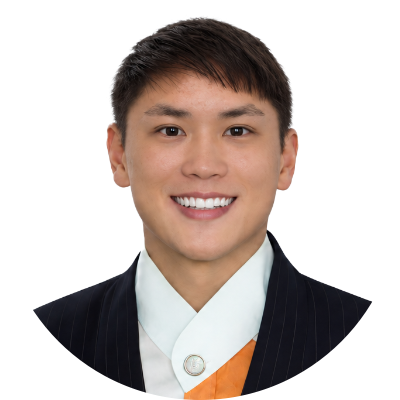
Jeremiah Barnabas
Jeremiah Barnabas is a late-diagnosed, high-masking, gifted autistic professional, doctoral student and the founder of Autistic Kueh. His experience of twice-exceptionality — being both gifted and autistic — informs his understanding that intellectual strengths and disability-related needs can coexist, without either cancelling out the other.
Based in Singapore, he works in governance, risk and compliance in the non-profit social service sector, following an earlier career in strategic communications. His work and interests centre on how people, organisations and systems understand one another, and how organisational structures, expectations and everyday decisions shape people’s opportunities to participate and contribute sustainably.
Late diagnosis has given him a different way to understand his own history: the difference between outward capability and the sensory, social and emotional cost involved in sustaining it. It has also brought greater attention to the support and recovery he needs, even when those needs are not apparent to others. This perspective informs his concern for people whose adaptations are recognised as competence while the difficulties and support needs beneath them remain unseen.
He is pursuing a Global Doctorate in Business Administration through Durham University and emlyon business school, with his formal doctoral work situated in business and management. His wider research interests include neuroinclusion — especially the lived experiences, wellbeing and workplace inclusion of neurodivergent professionals — and human–AI governance. He is also interested in the fit between corporate and non-profit partners for lasting community impact.
His creative work is also deeply personal. Living with alexithymia means that identifying and describing emotions can take time, even when he can analyse an experience in considerable depth. Reflexivity — returning to experience, noticing patterns and examining how meaning develops — became a starting point for designing The Life We Weave, an emotional reflection deck and one expression of Autistic Kueh’s wider purpose.
Through this work, Jeremiah brings together lived experience, creative expression and thoughtful inquiry. He hopes to contribute to a world where autistic people can be understood in their complexity, supported in their needs and valued as they are, without making lifelong camouflaging, exhaustion and burnout the price of social acceptance.